
Prinzident Restorative
Restorative Dentistry with Precision and Aesthetics
We reconstruct teeth minimally invasively: High-quality composites, CAD/CAM inlays and precise endodontics ensure lasting stability.
Direkt zu einem Abschnitt springen
- Digital 3D diagnostics & rubber dam
- Own master laboratory for ceramics & inlays
- Sedation & twilight sleep on request
Restorative Dentistry
Preserve tooth substance: with precision and aesthetics
Composite fillings, ceramic inlays and precise endodontics are digitally planned at PRINZIDENT, manufactured in the master laboratory and implemented with sedation options, so your tooth remains stable in the long term.
Direkt zu einem Abschnitt springen
- Digital 3D diagnostics & rubber dam
- Own master laboratory for ceramics & inlays
- Sedation & twilight sleep on request
Understanding Caries
Diagnosis, prevention and minimally invasive therapy
Caries is a bacterial disease. Sugar becomes acid, the tooth enamel softens and lesions form. The earlier we intervene, the smaller and gentler the treatment remains. Regular check-ups and prophylaxis prevent caries from becoming a root problem.
Diagnostics Overview
- Visual inspection with magnifying glasses and intraoral camera
- Bitewing X-ray for early diagnosis of approximal lesions
- Transillumination and digital DVT analyses for unclear findings
Prevention in Daily Life
- Low-sugar diet and preferably water instead of sugary drinks
- Brush teeth twice daily with fluoride toothpaste
- Daily cleaning of interdental spaces with dental floss or interdental brushes
- Semi-annual check-ups and professional teeth cleaning in individual recall
Composite Fillings
Tooth-colored restorations with high-end composites
For small and medium defects, we use composites with ceramic particles. They offer natural aesthetics, high load capacity and can be used minimally invasively.
Treatment Time
15–60 minutes depending on defect size
Anesthesia
Gentle anesthesia, on request laughing gas or twilight sleep
Durability
10+ years with good hygiene, often even lifelong
Why Composite?
- Natural aesthetics thanks to tooth-colored ceramic particles
- Adhesive fixation for excellent adhesion
- Minimal tooth substance loss: We only remove carious tissue
- Use also in the posterior region for small to medium defects
- Special conditions for students
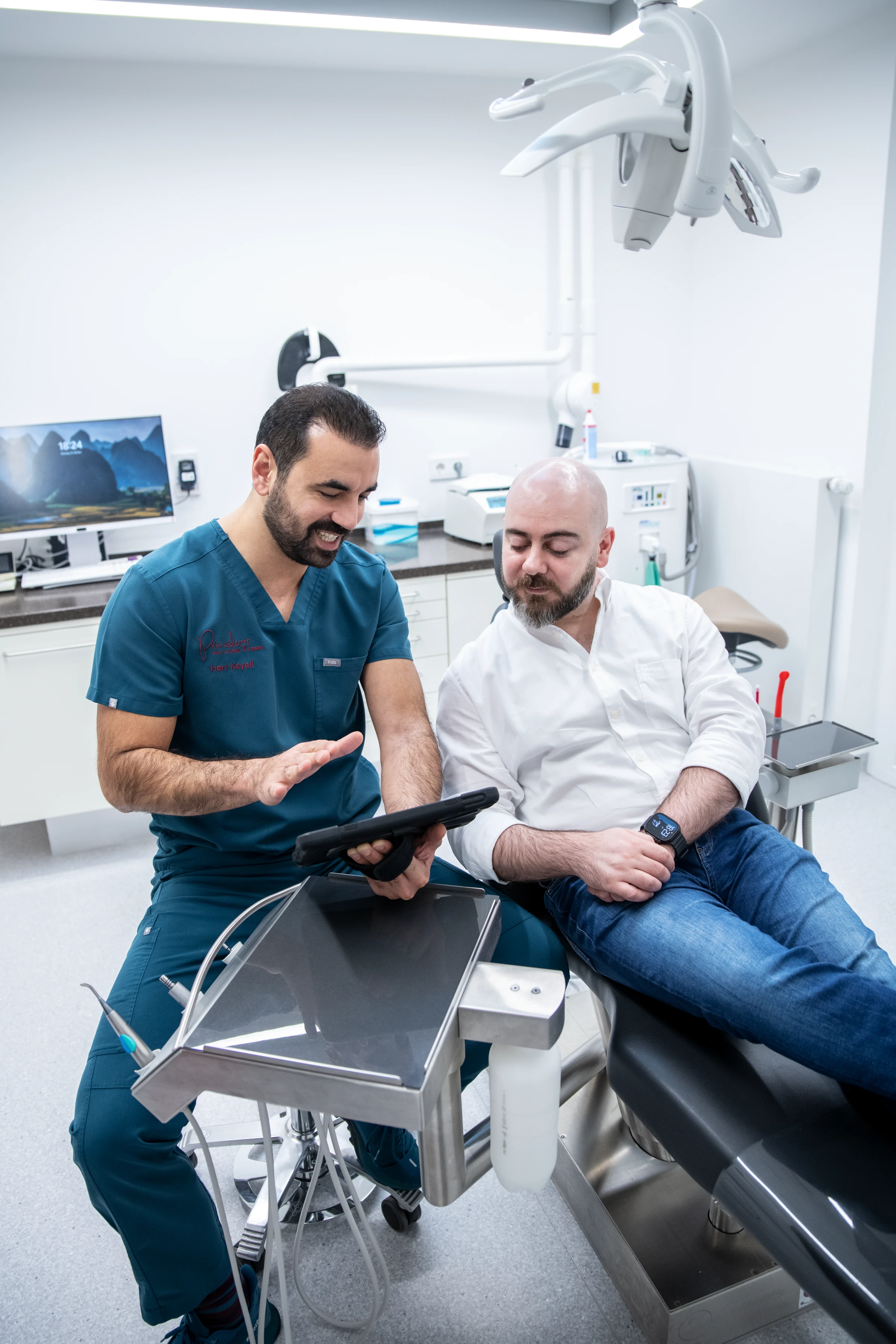
From rubber dam to high-gloss polish: We document every phase of the composite filling with photos and explain it via Infoskop, so you can follow the process at any time.
Inlays & Partial Crowns
Ceramic precision for long-lasting reconstructions
When defects become larger, ceramic offers the best compromise between stability, aesthetics and longevity. Our master laboratory manufactures each restoration individually and tests it in long-term provisionals.
Typical Applications
- Large-scale defects after caries or fractures
- Root-treated teeth that need to be stabilized
- High chewing load in the posterior region
- Aesthetic reconstructions with exact contact points
Workflow
- 01
Diagnostics
Digital impression, photo analysis and bite registration form the basis for laboratory and planning.
- 02
Preparation
Caries is removed minimally invasively, the defect is prepared and a provisional protection is inserted.
- 03
Laboratory Phase
The master laboratory layers ceramic, designs contact points and adjusts the form to the millimeter.
- 04
Insertion
Ceramic is adhesively inserted, occlusion is fine-tuned and the surface is polished.
- 05
Aftercare
Recall, PZR and fluoridation ensure long-term stability.
Ceramic at a Glance
- High-strength ceramics in individual color shades
- Adhesive fixation for maximum tightness
- Digital manufacturing in our own master laboratory
- Sedation or laughing gas for extensive sessions optional
Root Canal Treatment
Preserve inflamed teeth: precise and minimally invasive
A root canal treatment removes inflamed dental pulp, cleans and disinfects the canal system and seals it three-dimensionally. With rubber dam, digital length measurement and modern mechanical files, the tooth remains functional and the infection is permanently stopped.
We combine high-tech instruments with a lot of empathy. Sedation, laughing gas or twilight sleep are available so that sensitive or anxious patients can also remain relaxed.
Your Benefits
- Tooth preservation instead of extraction: We stabilize inflamed teeth long-term.
- Pain relief and freedom from inflammation through sterile working methods.
- Infection control: Abscesses and subsequent damage are reliably prevented.
- Natural chewing sensation and aesthetics remain preserved without additional prosthetics.
Treatment Process
- 01
Diagnostics & Shielding
Digital volume tomography, cold and sensitivity tests as well as Infoskop visualizations show every canal structure. Rubber dam ensures sterile conditions.
- 02
Mechanical Preparation
Modern mechanical files model the canals in a controlled manner up to the root tip: flexible, gentle and with high primary stability.
- 03
Disinfection & Activation
Ultrasonically activated irrigation solutions and Plasma Rich Fibrin promote healing and eliminate germs in lateral canals.
- 04
Tight Sealing
Thermoplastic obturation seals the canal system three-dimensionally. This is followed by adhesive build-up with composite or ceramic.
High-Tech Endodontics
Mechanical File System
Single-use instruments with controlled torsion reduce instrument breakage and reliably reach complex curvatures.
Digital Length Measurement
Endometry and DVT ensure millimeter-precise work in every root canal without over-instrumentation.
Thermoplastic Obturation
Heated gutta-percha seals the canal system down to lateral canals and prevents reinfections long-term.
Accompanying Care
- Sedation options such as laughing gas, twilight sleep or general anesthesia create relaxed treatments even for anxiety patients.
- Infoskop visualizes X-rays, explains every step and documents the course digitally.
- Recall planning with professional teeth cleaning stabilizes the tooth long-term.
FAQ
Frequently Asked Questions about Fillings, Inlays & Endodontics
What is caries?
How do I recognize caries?
How do I prevent caries?
What materials do you use for fillings?
Why can't composite close every gap?
How does a composite filling work?
How long does a composite filling take?
How is an inlay inserted?
What materials do you recommend for inlays/partial crowns?
How long does an inlay last?
What follow-up appointments are important?
What is a root canal treatment?
Why do I need a root canal treatment?
What does modern (mechanical) root canal treatment mean?
What is the disadvantage of manual endodontics instruments?
How do we plan the effort of a root canal treatment?
Why is the quality of a root canal treatment so important?
Request Restorative Consultation
Describe your concern. Our restorative team will contact you within one business day with appointment suggestions.